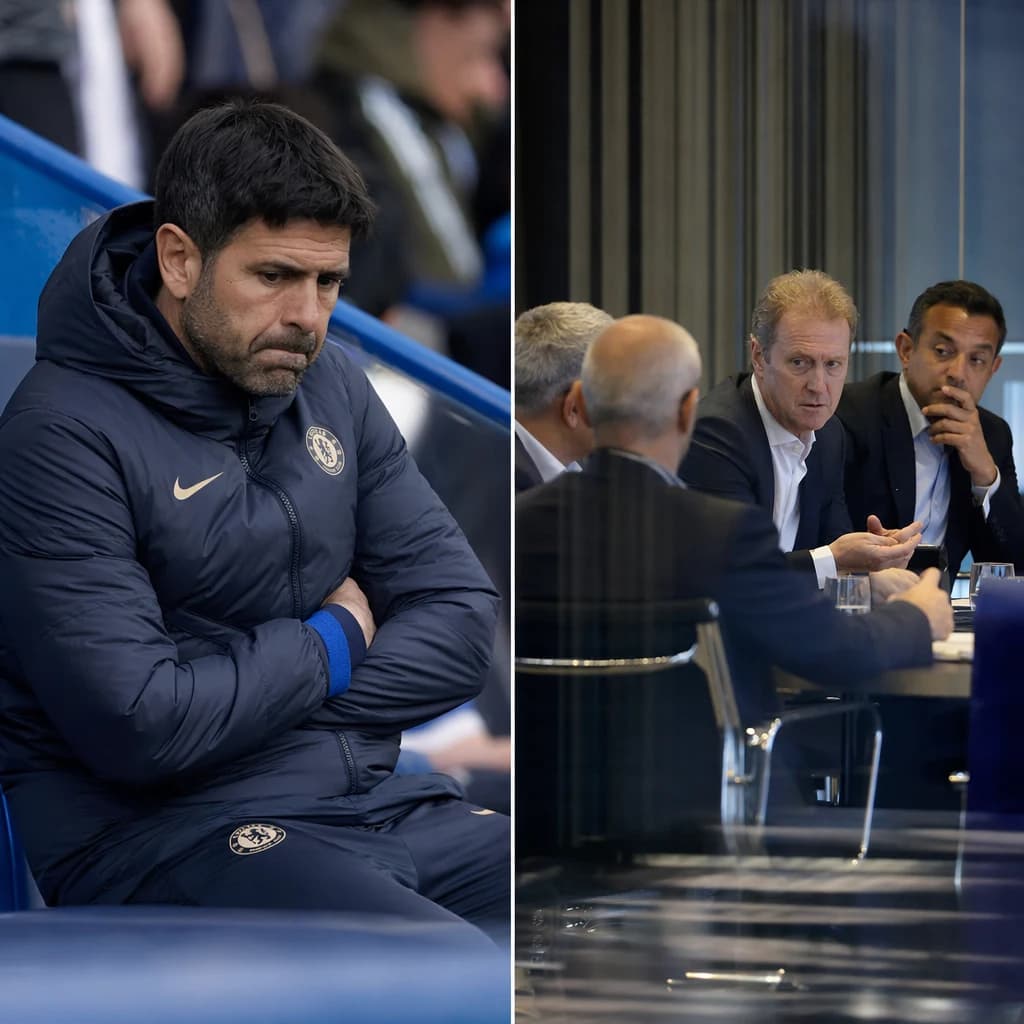
Chelsea's search for their sixth manager since BlueCo's 2022 takeover, following Liam Rosenior's dismissal after just 3.5 months, has exposed a structural problem that makes the Stamford Bridge job uniquely challenging according to industry analysis and former players.
Record-breaking managerial turnover under BlueCo ownership
According to reports from multiple outlets, Rosenior's sacking represents the latest casualty in BlueCo's approach of treating managers as interchangeable components. The 40-year-old lasted just 23 games after signing a 6.5-year contract in January, recording Chelsea's worst goalless run since 1912 with five consecutive league defeats without scoring.
Former Chelsea winger Pat Nevin questioned the ownership's approach, stating: "This is manager number six. When you change it that amount of times, you have to ask the question - is the problem really the manager?"
The managerial carousel began within 100 days of BlueCo's £4.25 billion takeover, with Thomas Tuchel's dismissal in September 2022. Graham Potter, Frank Lampard, Mauricio Pochettino, and Enzo Maresca have all followed, with none lasting more than 18 months under the new regime.
£1.9bn spending spree creates squad imbalance
BlueCo has sanctioned £1.867 billion in signings since 2022, with over £1 billion spent on players aged 24 and under according to analysis by Soccer Magazine. However, of the 52 players signed, only four have become indispensable: Moises Caicedo, Enzo Fernandez, Marc Cucurella, and Cole Palmer.
The strategy has created a bloated squad where managers inherit players they had no role in selecting, while being denied input on future transfers. This disconnect between recruitment and coaching has left successive managers struggling to build coherent tactical systems from disparate parts.
Chelsea's operating losses have totalled £689 million over three years under BlueCo ownership, equating to £629,000 per day, while cumulative losses since the takeover have reached £1.675 billion according to financial analysis.
Corporate structure strips managers of traditional authority
Reports suggest BlueCo, controlled by Clearlake Capital's 61.5% stake, operates a rigid corporate model where managers have no input on transfers or strategic decisions. This represents a fundamental departure from traditional football management, where coaches typically influence squad building and tactical direction.
University of Liverpool football finance lecturer Kieran Maguire described the approach as "dehumanising policy," while unnamed insiders have questioned which elite manager would accept such constraints.
The ownership views head coaches as employees focused solely on match preparation and team selection, while all broader football decisions remain centralised under the BlueCo structure dominated by Clearlake Capital rather than public figurehead Todd Boehly.
Elite managers now view Chelsea role as career risk
The combination of £1.675 billion in losses, six managerial changes in four years, and missing Champions League qualification in three of four seasons under BlueCo has created what analysts term the "most difficult job in world football."
The structural constraints mean incoming managers face massive pressure for immediate results while lacking the authority traditionally associated with elite coaching roles. This toxic combination has made Chelsea a cautionary tale for ambitious coaches, with the rapid turnover serving as evidence that even experienced managers cannot overcome systemic limitations.
As Chelsea prepare their sixth managerial search in under four years, the fundamental question remains whether any coach can succeed within BlueCo's rigid framework that prioritises corporate control over football expertise.