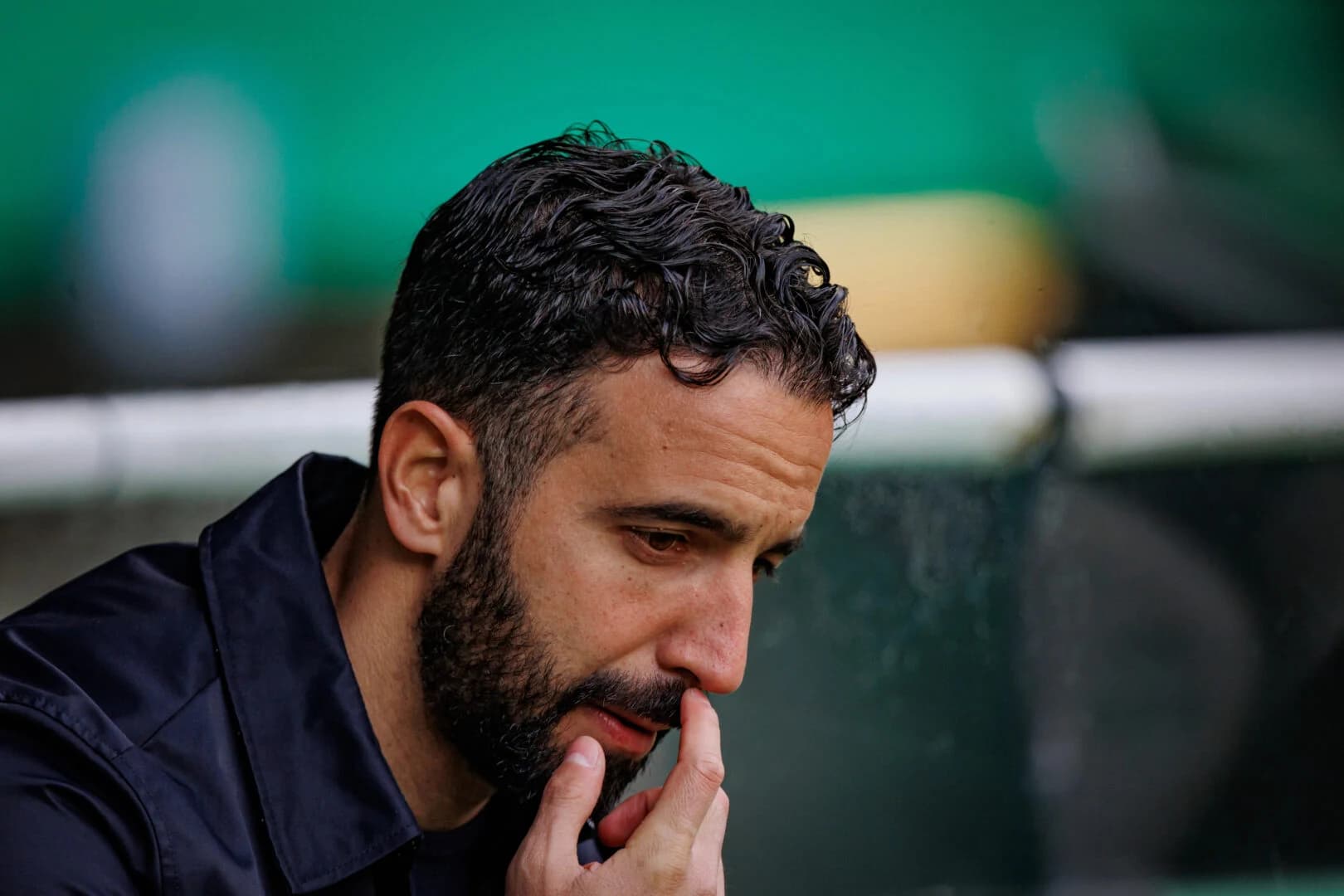
Manchester United have once again reached for the eject button, terminating the tenure of Ruben Amorim in a move that speaks as much to institutional impatience as it does to results on the pitch. The Portuguese coach departs Old Trafford after just 14 months, his exit triggered by a volatile mix of disappointing performances and a public confrontation with the club’s hierarchy that left little room for reconciliation.
The decision followed a tense draw at Leeds, a match that crystallised broader frustrations within the club’s leadership. Amorim’s willingness to air grievances publicly, particularly around governance and authority, crossed a line in a club increasingly sensitive to image and control. In an environment already marked by turbulence, the board opted for swift and decisive action.
Numbers That Told A Bleak Story
Beyond the rhetoric and emotion, the data surrounding Amorim’s reign offered limited protection. Appointed in November 2024 as successor to Erik ten Hag, he oversaw 63 competitive matches, delivering only 24 victories. The resulting win percentage of 38 percent placed him among the least effective Manchester United managers of the Premier League era.
While context matters, including squad imbalance and ongoing structural change, elite clubs are ultimately governed by outcomes. Sitting sixth in the Premier League at the time of his dismissal, United’s leadership concluded that stagnation posed a greater risk than disruption, particularly with European qualification and commercial imperatives at stake.
Category
Total
Matches Managed
63
Wins
24
Win Percentage
38 Percent
League Position At Dismissal
Sixth
Club Statement Signals Calculated Distance
Manchester United confirmed the decision through a restrained official statement, reflecting a desire to close the chapter quickly. The wording suggested reluctance rather than regret, framing the dismissal as a strategic necessity rather than an emotional reaction to recent events.
The club stated
With Manchester United sitting sixth in the Premier League, the club’s leadership has reluctantly made the decision that it is the right time to make a change. This will give the team the best opportunity of the highest possible Premier League finish. The club would like to thank Ruben for his contribution to the club and wishes him well for the future.
The brevity of the message underscored the finality of the decision.
The Outburst That Sealed His Fate
Less than 24 hours before his dismissal, Amorim delivered a defiant and revealing press conference that laid bare internal tensions. Speaking with visible frustration, he challenged the scope of his authority and questioned whether the club was structurally equipped to withstand external criticism.
He told reporters
I came here to be the manager of Manchester United, not to be the head coach. I know my name is not Antonio Conte, Thomas Tuchel, or Jose Mourinho but I'm the manager of Manchester United. It's going to be like this for 18 months or until the board decide to change. I'm not going to quit. I'll do my job until another guy is coming here to replace me.
Authority Power And A Broken Agreement
Amorim expanded on his position by framing his role as part of a fixed term understanding, one that extended beyond the technical area and into the operational fabric of the club. His comments suggested a belief that responsibility had been unevenly distributed across departments.
He added
I just want to say that I’m going to be the manager of this team, not just the coach. I was really clear on that and that is going to finish in 18 months and then everyone is going to move on. That was the deal. That is my job. Not to be a coach.
Criticism Pressure And Institutional Fragility
In perhaps his most pointed remarks, Amorim referenced the club’s sensitivity to external voices, implicitly criticising a culture that he felt lacked resilience. The mention of former players turned pundits struck a nerve, reflecting ongoing struggles between legacy influence and modern management.
He concluded
If people cannot handle the Gary Nevilles and the criticisms of everything, we need to change the club. I just want to say I came here to be the manager, not to be the coach. In every department the scouting department, the sporting director needs to do their job, I will do mine for 18 months and then we move on.
Those words now stand as the final public record of a tenure defined by ambition, conflict and an abrupt end.